

What Is THC? Effects, Uses, Benefits & Safety Info
It is also notable that remarkably little work has gone into accurately quantifying important cannabis compounds in different cannabis cultivars or developing reagents or techniques to enable their quantification. Instead (most of the information is scattered across several textbooks), monographs, and scientific journals.6,7 Furthermore, most of this information incompletely describes the precise structures, nomenclature, and other essential properties of these chemicals. While a large body of research exists that has focused on characterizing the chemical compounds in cannabis, there is no single resource that catalogues all known cannabis constituents. The information on this site should not be used as a substitute for professional medical care or advice.
These include many of the cannabinoids commonly found in marijuana and hemp products, as well as acidic precursor compounds such as THCA, CBDA and CBGA. At Releaf (patients under the age of 25 are not prescribed products above 21% THC), as the prefrontal cortex continues developing until around 25 years of age. With support from Glass Pharms, patients also gain access to UK-grown cannabis produced with a continuous harvest system, reducing wait times and supply interruptions. Because of their strength, vapes are generally prescribed for patients who need fast relief or who have not responded well to lower-strength products.
As one of the largest licensed exporters of cannabis-based medicines worldwide, the UK sees private clinics depend significantly on https://thc-high.com/buy-weed-belfast/ EU-GMP flower imported from Portugal, Australia, and Canada through controlled-drug import licences. JMK Ventures LLC offers this page solely for informational purposes; it does not constitute legal advice. Individuals prescribed cannabis medicines in other countries should present their prescription along with a doctor’s letter and verify Home Office personal import regulations prior to travelling, as recreational use lacks a similar route.
Patients at Releaf consult with specialists registered with the GMC, supported by a clinical team consisting of over 30 medical professionals. Patients are required to carry their prescription in its original packaging with a clearly printed label while travelling, as recreational use remains illegal. In the UK, THC levels that are legally permissible exceed 0.2% when prescribed by a qualified specialist. After receiving approval and confirming payment, your prescribed medication will be discreetly dispensed and delivered to your doorstep within two working days via tracked shipping. At Releaf, the process of obtaining a THC prescription starts with a complimentary eligibility assessment for medical cannabis. Many products are designed with THC and CBD concentrations ranging from 5% to 10%, whereas certain specialized formulations can achieve levels as high as 25% or even 50% of both compounds.
How do UK doctors prescribe THC?
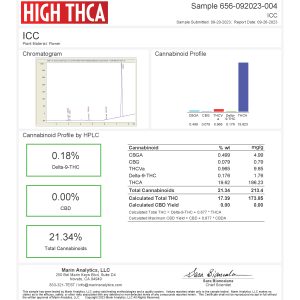
- People in Ontario can buy non-medical cannabis products through retailers that are licensed by the provincial government.
- Cannabinoids represent a varied category of compounds (each with unique pharmacological characteristics), potential advantages, and varying degrees of scientific validation.
- Users claim it has the ability to induce happiness and laughter, even in moments of depression.
- Each batch features a formulation resistant to crystallization — ensuring the extract remains liquid and vaporizable even in colder temperatures.
- Some studies indicate that the ancient drug soma mentioned in the Vedas may have sometimes included cannabis.
- For certain individuals, Northern Lights can create a “couch lock” sensation, draining their energy.
The speed at which a drug takes effect and its duration can differ based on its method of consumption, such as whether it is smoked or ingested. Cannabidiol (CBD) is another prevalent cannabinoid found in cannabis plants. This is the element in cannabis responsible for producing a ‘high’ sensation. This site serves purely for informational purposes and should not be utilized as professional medical guidance.
Cannabis at high doses can produce strong hallucinogenic effects in some people. Additional desired effects from consuming cannabis include relaxation (a general alteration of conscious perception), increased awareness of sensation, increased libido and distortions in the perception of time and space. There is some evidence suggesting cannabis can be used to reduce nausea and vomiting during chemotherapy — to improve appetite in people with HIV/AIDS, or to treat chronic pain and muscle spasms. The rigorous scientific study of cannabis as a medicine has been hampered by production restrictions and by the fact that it is classified as an illegal drug by many governments. Other countries to do so are Canada (Georgia), Germany, Luxembourg, Malta, South Africa, and Thailand. The possession, use, and cultivation of cannabis has been illegal in most countries since the 20th century.
Products marketed under names like Spice or K2 may be discussed alongside weed casually, yet they are fundamentally dissimilar. Their safety profiles are not well understood due to a lack of testing comparable to the extensive research conducted on delta-9-THC over the years. When individuals refer to “THC” without additional specifics (they usually mean delta-9-THC), which is the most prevalent and extensively researched psychoactive cannabinoid.

Or the state may allow people to obtain medical cannabis from nonprofit “collectives” in which multiple patients band together to produce and provide cannabis to themselves. THC is a psychotropic chemical that makes people feel “high,” whereas CBD is a nonpsychotropic chemical.9 With the recent legalization of cannabis, medical use of cannabis and its compounds has increased. Studies suggest THC products can modestly reduce muscle spasms — a common symptom experienced by people with Multiple Sclerosis (MS) and paraplegia. Chronic pain relief is the most common reason why people seek medical cannabis.
11-Hydroxy-THC appears to have a similar terminal half-life to that of THC, for instance 12 to 36 hours relative to 25 to 36 hours in one study. Many studies report an elimination half-life of THC in the range of 20 to 30 hours. Side effects of THC can include red eyes, dry mouth, drowsiness, short-term memory impairment, difficulty concentrating, ataxia, increased appetite, anxiety, paranoia, psychosis , i.e., hallucinations, delusions,, decreased motivation, and time dilation, among others. THC is sometimes prescribed off-label to treat glaucoma — Crohn’s disease, and post-traumatic stress disorder (PTSD). For more information on legal cannabis products and regulatory updates, explore additional guides online for expert insights.
That biological activity is why CBD products carry dosing information and are regulated in many markets. The plant contains over 500 distinct chemical compounds, including 125 identified cannabinoids and 120 terpenes. As a tireless advocate for the benefits of premium hemp-derived THC and CBD products, Colby ensures that all content is accurate, engaging, and informative. Each article is fact-checked and includes sources to scientific data to ensure readers receive the most up-to-date and accurate information possible. The team has a keen understanding of the topic, remain current on all FDA and industry news, and use their expertise to generate engaging and informative content to help educate consumers on Diet Smoke’s products.
It is the most widely used largely-illegal substance globally (with the highest consumption rates reported among adults in Zambia), the United States, Canada, and Nigeria. In 2013 (the number of cannabis users ranged from 128 to 232 million), accounting for 2.7% to 4.9% of the global population aged 15 to 65. Tetrahydrocannabinol (THC) serves as the primary psychoactive element in cannabis and is one of the 483 recognized compounds in the plant, which also includes at least 65 other cannabinoids like cannabidiol (CBD). Therefore, exercising caution with marijuana and other cannabis products is essential.
Conversely, most states mandate that medical cannabis products available in dispensaries undergo testing. This individual functions as an adult intermediary for the purchase (delivery), and/or administration of medical cannabis to certified patients. Doctors are not permitted to “prescribe” cannabinoid-based products unless they are categorized as one of the four pharmaceuticals approved by the FDA. To obtain legal permission for medical cannabis use under a medical marijuana program — understanding the specifics of your state’s medical marijuana law or program is crucial. Leading experts from Harvard Medical School are now available to assist you in distinguishing fact from alarming fiction regarding medical cannabis, enabling you to make well-informed choices.